Product Description
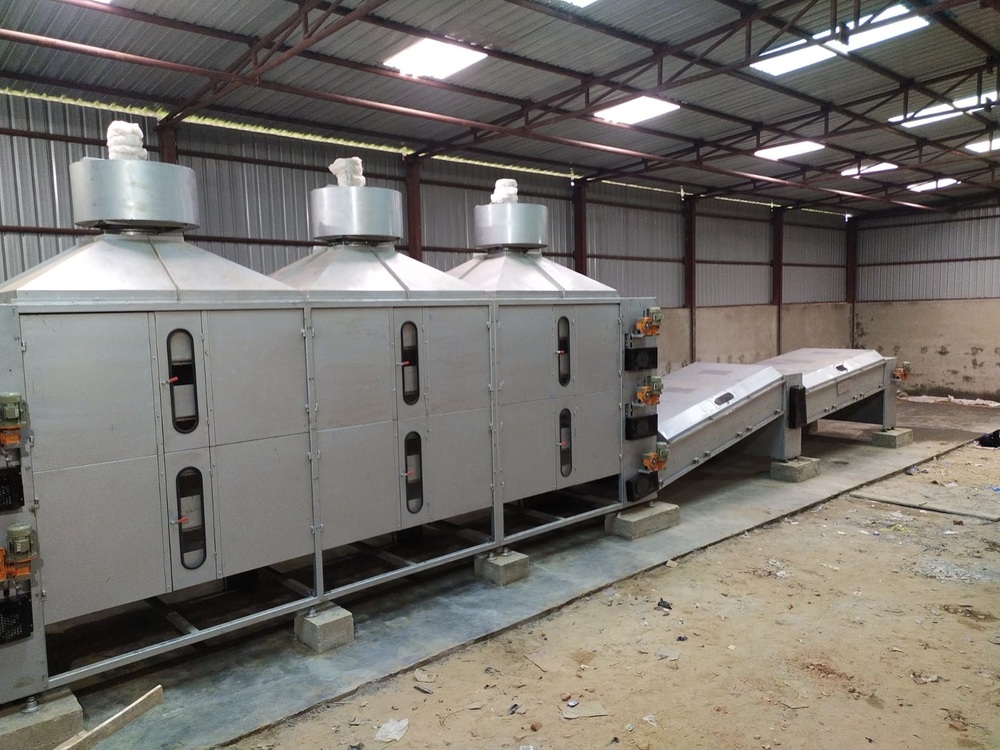
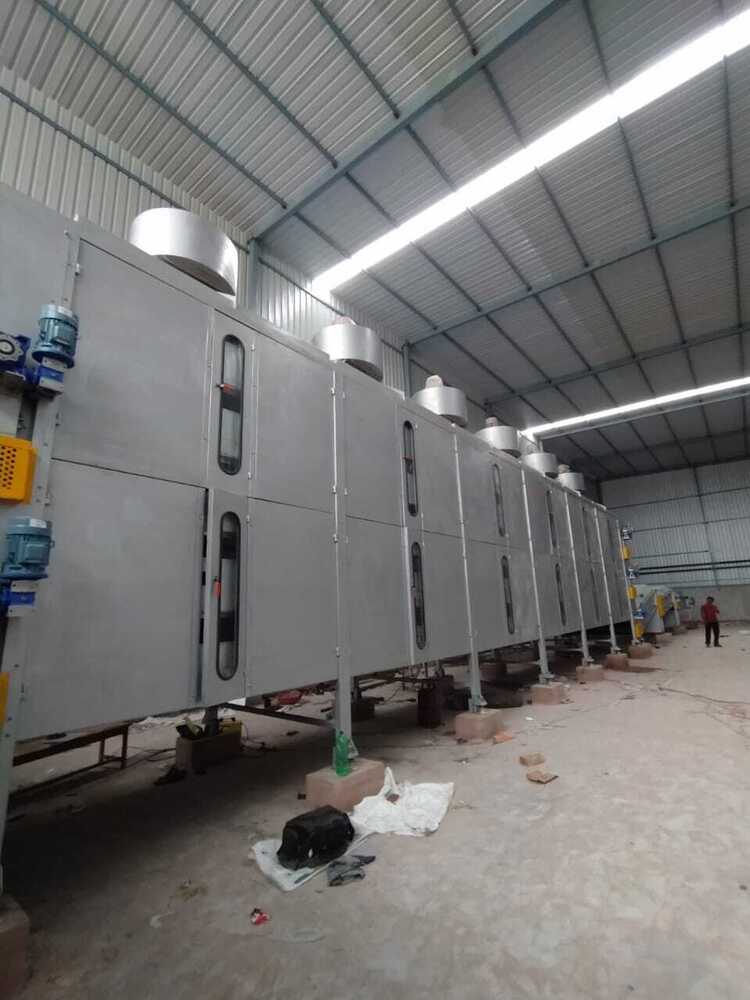
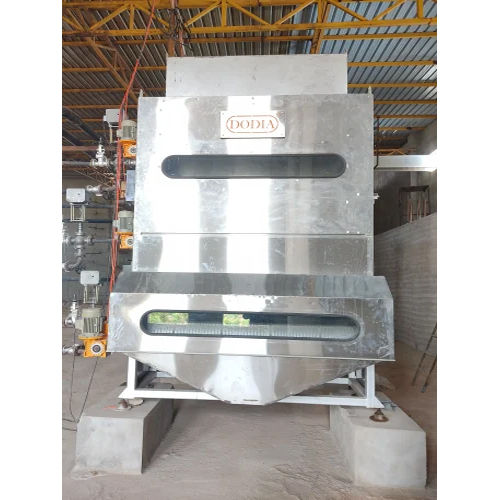
The 5 stage continuous conveying dryer is a versatile equipment used for the drying of the produces like onion, garlic, turmeric, ginger, carrot, cabbage, chilies and other vegetable products on continues basis.
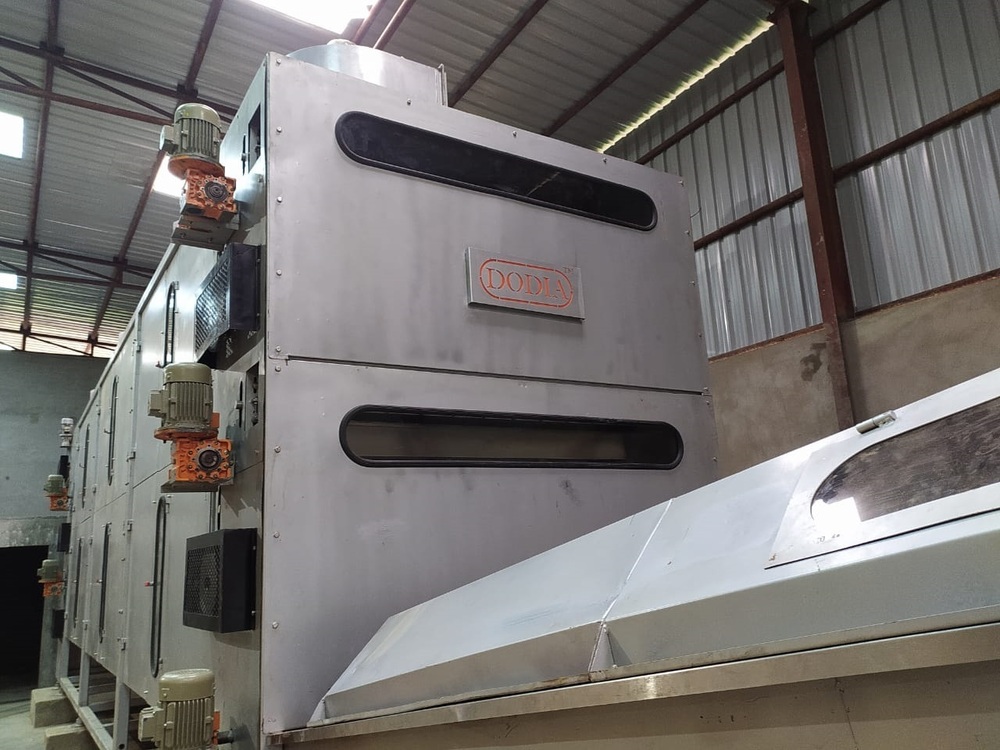
There are five belts with the individual drives which carry the material are arranged in vertical plane.
Heating coils for heating are provided for the precise control of the temperature. The hot air passes through the permeable bed of the material for effective drying.
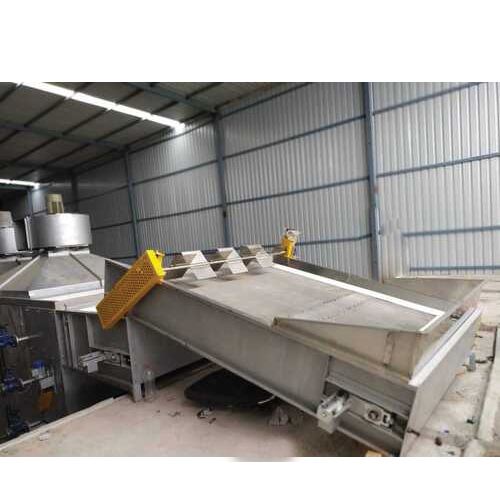
The fresh material is fed on the top belt which carries it to the end and from there it is transferred on the belt underneath the first one, similarly it is transferred on all the other belts till it reaches the bottom belt.
The rising air from the bottom is heated to the desired temperature to effectively dry the product. The draft is induced by the exhauster fans to drive the air upwardly.
The final exhaust of the air from the dryer is by the fans on the top of the dryer. This is the moist air which is released from the dryer.
Advanced Automation and ControlEquipped with fully automatic programming and a PLC control system, the plant ensures streamlined operations and precise process management. Variable running speed allows operators to adjust drying times and optimize energy consumption, offering greater flexibility for different food products.
Efficient and Hygienic Material ConstructionBuilt from high-grade stainless steel, this dehydration plant provides corrosion resistance and ensures food safety standards. The continuous belt conveyor facilitates uniform drying while minimizing manual intervention, greatly reducing the risk of contamination and ensuring a consistently high-quality output.
Complete Turnkey SolutionThe plant is delivered as a complete turnkey package, encompassing installation, setup, and training. With low noise and minimal fuel consumption, it is designed for high output and sustained performance in industrial environments. Its wooden packaging ensures safe transport and delivery, even over long distances.
FAQ's of Tomato Dehydration Plant:
Q: How does the Tomato Dehydration Plant operate automatically?
A: The plant integrates a PLC control system and fully automatic mechanisms, enabling real-time monitoring and adjustment of key parameters. This automation streamlines the drying process, minimizes manual labor, and ensures consistent results across all batches.
Q: What materials can be processed in this dehydration plant?
A: While optimized for tomatoes, the plant efficiently handles a variety of fruits and vegetables, ensuring versatility for food processors who wish to expand their product range with minimal equipment modification.
Q: When is the ideal time to install the Tomato Dehydration Plant?
A: Installation can be planned according to your production schedule, with the complete turnkey service provided by the manufacturer. Since the system is designed for fast setup, facilities can integrate the plant without lengthy downtimes.
Q: Where is this dehydration plant most effectively used?
A: The system is best suited for industrial environments, such as large food processing units, exporters, and commercial suppliers seeking high-capacity tomato and vegetable drying within India or abroad.
Q: What is the drying process inside the plant?
A: Fresh produce is placed on the continuous belt conveyor, passing through controlled temperature zones (50C-80C) where moisture is carefully removed. The process guarantees uniform drying while preserving the natural color and nutrients of the products.
Q: How does using this plant benefit food processors?
A: Users gain high efficiency, low maintenance, and reduced operational costs, alongside consistent product quality. The stainless steel construction ensures hygiene and longevity, while advanced automation increases output and reliability.
Q: What safety measures are included with the plant?
A: The plant's construction from rust-proof stainless steel and low noise engineering reflect its focus on safe, hygienic, and comfortable operation, while its electric power requirement and controlled temperature range contribute to secure processing.






 English
 Spanish
 French
 German
 Italian
 Chinese (Simplified)
 Japanese
 Korean
 Arabic
 Portuguese


 Send Inquiry
 Send Inquiry
 Send SMS